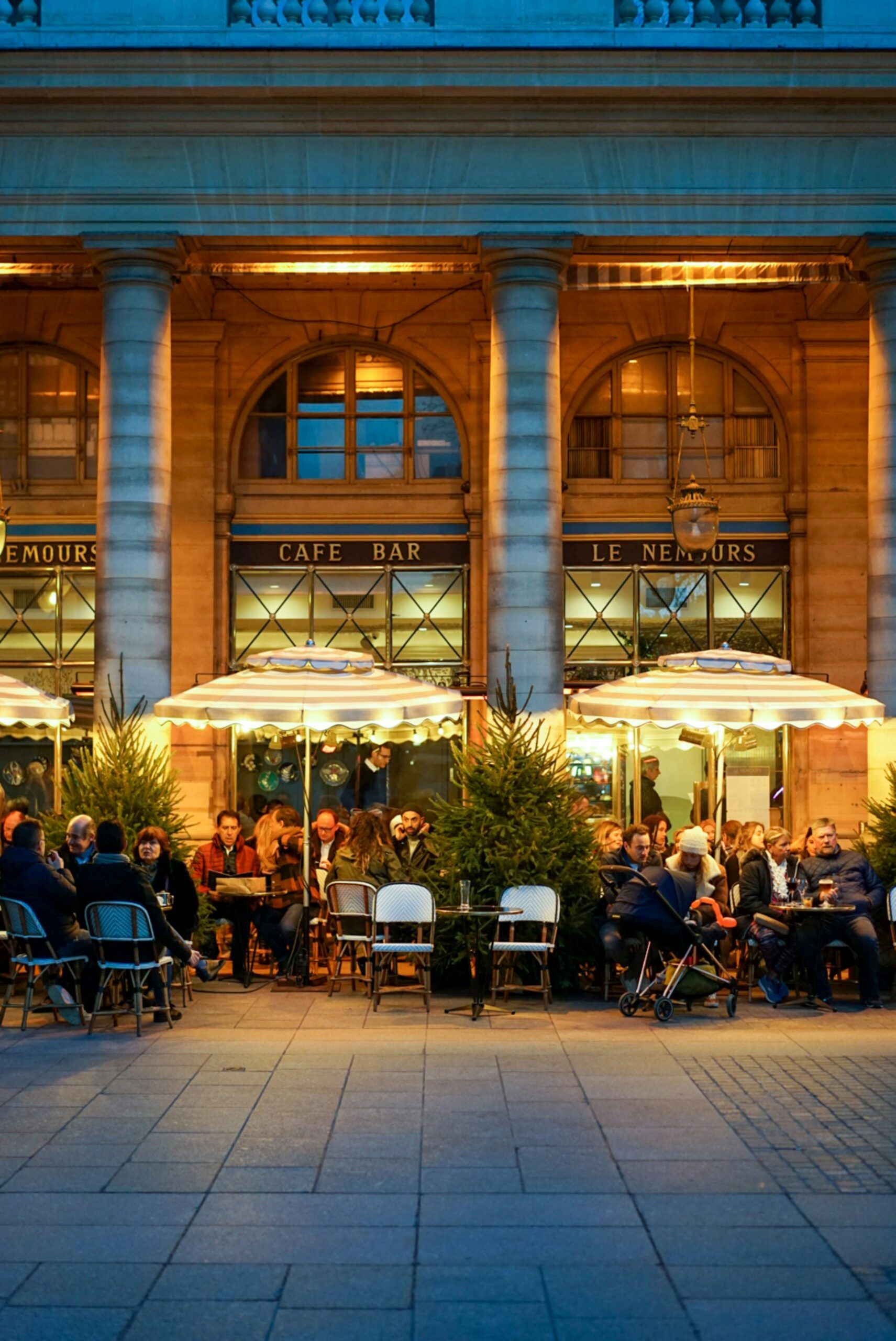
Every society has its own etiquette, its own subtle rhythms and unspoken rules when it comes to conversation. What feels perfectly natural in one country can feel slightly off-key in another. After nearly six months of living in France, I’ve come to appreciate the beautiful nuance of the French approach to an initial exchange. It’s thoughtful, measured, and surprisingly charming once you understand the flow. Here’s what I’m learning slowly and sometimes after replaying conversations in my head. These are my culture tips for expats in conversation.

The Do’s – Culture Tips for Expats
1. Always Begin with “Bonjour”
Think of bonjour as a verbal handshake. Before a question, before a request it sets the tone and shows respect. Bonjour is only used during the day, and Bonsoir is used for the evening.
2. Start with “Vous”
The French language has both a formal (vous), and an informal (tu) way to say “you”. Beginning with “vous” is considered good manners. The shift to “tu” will come naturally if the other person suggests it. Until then, “vous” should be used. This is for all conversations whether at the pharmacy, grocery store and even with your colleagues at work.
3. Master The Art of Light Complaining – Culture Tips for Expats
Sharing a critique about the weather, the trains or bureaucracy is actually seen as a way of bonding. It’s rarely harsh, more of a shared understanding. A bit of thoughtful criticism, expressed in a controlled and measured way, is often a sign that someone cares deeply about their country and its systems, it’s basically a social glue. The key however is subtlety.
4. Showing Curiosity About Culture
Showing curiosity about food, culture or the city is a wonderful way to start conversations. Genuine interest opens doors and signals appreciation.
5. Engaging in Thoughtful Discussion
Lively conversation, even mild disagreement is not necessarily seen as conflict but as a lively exchange of ideas. Different opinions are welcomed when expressed respectfully.
6. Close with “Au Revoir”
Au Revoir (Good bye) is just as important as Bonjour. This practice is something that is expected, it’s leaving on a gracious note. Whether leaving a store, pharmacy, bakery, or restaurant anywhere you have entered an Au revoir is always exchanged. This courtesy is something I came to learn quickly from personal experience. Being in France for a short period of time after completing my hair appointment at a salon upon leaving not only did the hairstylist say good bye but so did all the customers in the salon as well. It’s really quite a nice tradition, it creates a sense of warmth. Now I have adapted and adopted this nice closure to a visit.


The Don’ts – Culture Tips for Expats
1. Avoid Rushing Familiarity
Don’t skip straight to first names or oversharing instant familiarity can feel invasive. Oversharing or jumping too quickly into personal questions can feel abrupt. Ease into it.
2. Dial back on Over–the-top Enthusiasm
A calm steady presence lends to land better than high-volume cheerfulness. Subtle confidence feels more natural than big energy.
3. Skipping “So what Do You Do?”
Career questions can be seen as intrusive early on. Interests, culture, even current events often make for more comfortable openings.
4. On a lighter note – culture tips for expats
In learning the language I am always learning that I cannot assume that everything has a direct translation from English to French. Some of the learning can be quite funny once you look back. One of these learning moments for me happened in a restaurant at the end of a very good meal. The waiter came to pick up my dish asking if I would like anything else. I proudly announced my rehearsed phrase in French “ I am dead and would love to see the dessert menu.” I had used the word “fini” which means done, actually it literally means done! Since then, I have learned to use “Je suis termine”. The waiter was wonderful, he just showed a little smile but did not lose a beat and brought me the dessert menu.
What I appreciate most here is that politeness comes first, warmth follows, and familiarity grows naturally. Conversation here feels less transactional and more intentional. I have found that even if your French is imperfect just the effort is greatly appreciated and welcomed.
Thanks for being here,
-Soraya
Leave a Reply